Backtesting and its importance
This deep dive explains the importance of backtesting.
Learning Objectives
By the end of this deep dive, you will understand:
- what is backtesting
- how to backtest a trained a recipe
- how to improve a recipe using backtesting
What is Backtesting?
- Backtesting is a method used to test new changes or settings on a trained recipe using previous images, especially those it didn’t perform well on.
- It helps evaluate how the updated recipe would perform on known data before applying it to new cases.
- You can backtest images on these settings:
- Template Image and alignment
- Inspection Setup
- Classification Block

Backtesting on Template Image and Alignment
You can upload the failed capture to adjust the recipe settings and ensure it adapts correctly to the change.
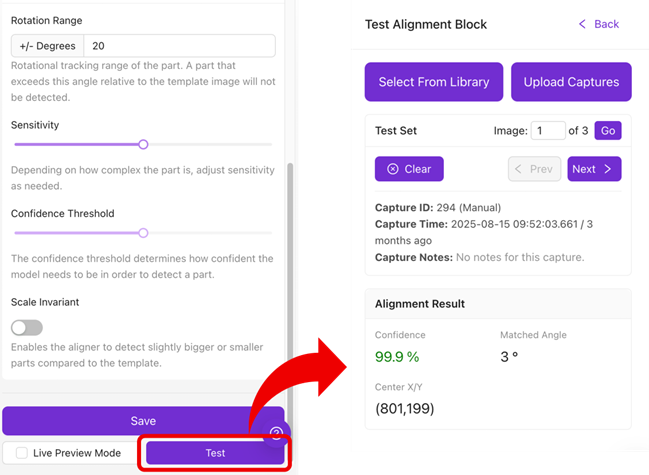
The variation between the aligned reference image and the detected image highlights misalignment, which is corrected through this process.
| Trained aligner | Found aligner | Fixed aligner and backtested |
|---|---|---|
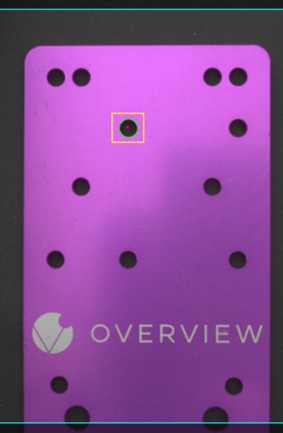 | 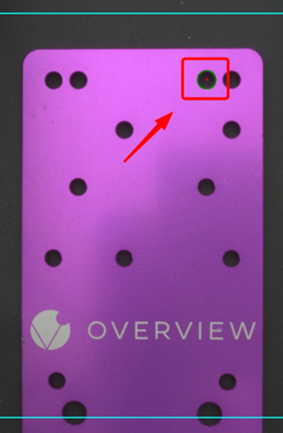 |  |
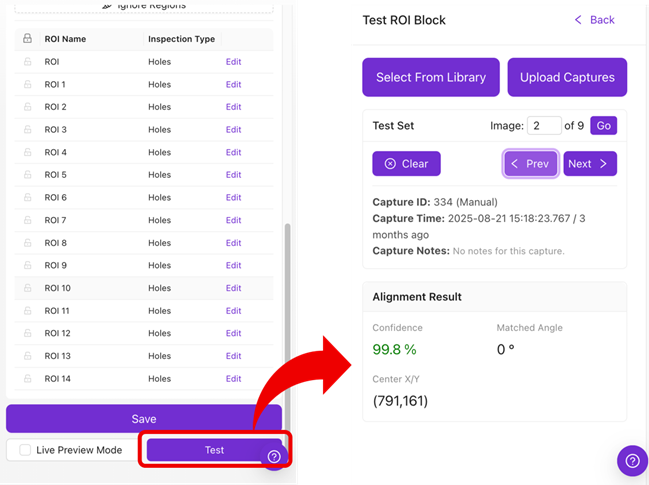
Backtesting on Inspection Setup
You can upload the failed capture to adjust the ROI settings and ensure it adapts correctly to the change.
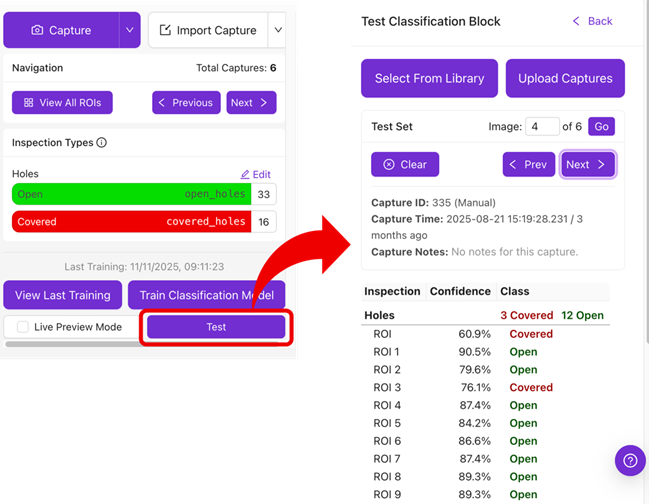
Backtesting on Classification Block
Upload the failed image to check if the model’s performance has improved after adjustments or retraining.