AI 驱动文档
您想了解什么?
创建您的第一个程序 (OV80i)
这是您的相机变身为 AI 检测员的地方。程序是一个完整的包(图像设置、对齐、感兴趣区域 (ROI)、AI 模型和输出规则),针对一个特定的检测任务捆绑在一起。
您可以在一台相机上拥有任意数量的程序。每个程序都可以保存、备份、传输到其他相机,并进行版本控制。
开始之前:记住瀑布原则
本节中的所有内容都遵循瀑布原则。您将按顺序经过六个步骤。不要跳过。 在进入下一步之前,验证每一步都能正常运行。
图像设置
曝光、增益、光照
模板与对齐器
捕获、对齐
感兴趣区域 (ROI)
绘制 ROI
AI 训练
标注、训练
输出规则
通过/失败、IO
部署!
激活、验证
创建新程序
- 在左侧边栏中转到 All Recipes(这也是打开相机时的着陆页面)
- 点击 + New
- 为其命名(例如 "Surface Defect Inspection")
- 选择程序类型:Segmentation 或 Classification(如下所述)
你希望此配方做什么?
每个 OV80i 配方使用一种模型类型。根据你需要回答的问题进行选择。你以后可以更改。
判定每个零件或每个感兴趣区域 (ROI) 属于哪个类别。
最适合: 判定结果和已知类别,答案是每个区域一个标签的场景。
在像素级别查找并勾勒特征、缺陷或区域。
最适合: 定位、测量或计数那些形状和位置很重要的特征。
60 秒了解分类
阅读《了解分类器》 →分类器查看你绘制的每个区域,并从你定义的列表中为其分配一个标签。模型为每个 ROI 返回一个判定结果:该区域为"合格"、"缺失"或"划伤"。大多数 OV80i 配方都从这里开始。
示例:缺失紧固件
在四个螺钉位置上设置四个 ROI。两个类别:存在和缺失。模型为每个 ROI 返回一个标签。
示例:表面合格 / 不合格
在面板表面上设置一个 ROI。两个类别:干净和有瑕疵。模型为该面板返回一个标签。
想要并排对比?请参阅 Classifier vs. Segmenter。想要深入了解任一模型类型?阅读 Understanding Classifier 了解判定与标签,或阅读 Understanding Segmenter 了解像素级蒙版、计数与测量。 5. 点击 Activate 进入程序编辑器

OV80i 支持多模型程序。您可以在单个程序中组合分类器和分割器以实现全面检测。例如,使用分类器检查零件是否存在,使用分割器检测表面缺陷,全部集成在一个程序中。
不确定该选择哪一个?请参阅 Classifier vs. Segmenter 或在 tools.overview.ai 询问 AI 助手。
OV80i 支持多模型程序,允许您在单个程序中组合分类器和分割器以实现全面检测。例如,使用分类器验证零件是否存在,使用分割器检测表面划痕,全部基于同一次捕获运行。
现在遵循以下六个步骤:
第一步:图像设置
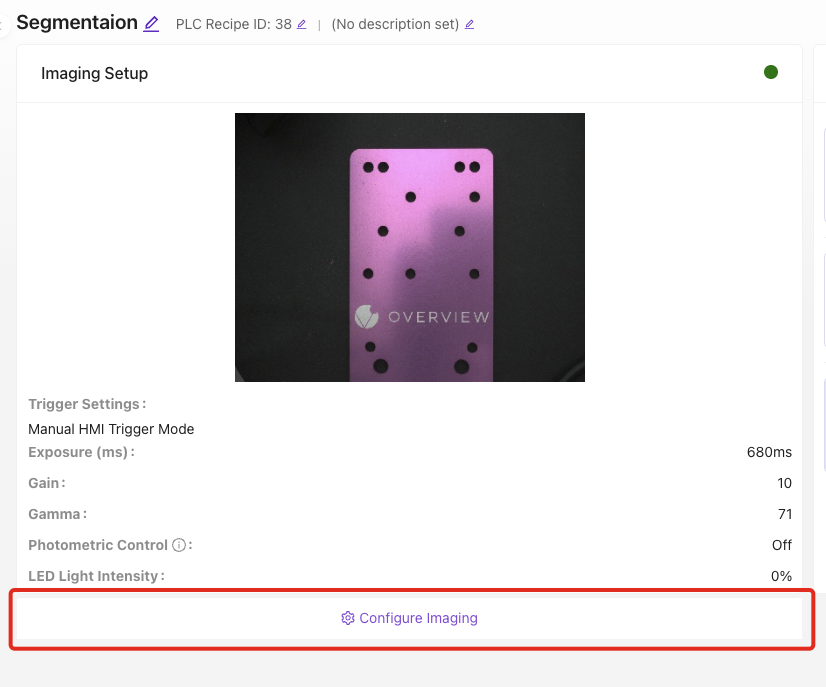
让您的相机图像看起来清晰且一致。调整曝光、增益、白平衡,关键是,如果您使用广角镜头,请启用镜头畸变校正。
关键设置:
- Exposure(曝光): 传感器捕获光线的时长。值越高 = 越亮但运动模糊越严重
- Gain(增益): 数字亮度提升。值越高 = 越亮但噪声越多
- Lens Correction(镜头校正): 修正广角镜头的桶形畸变。**如适用请立即启用。**不要跳过此步骤
- 外部照明: 在继续之前,请验证您的照明是否均匀且一致
继续之前请验证: 点击 Live Preview。图像应清晰、光线充足,且每次拍摄都保持一致。
第二步:模板图像与对齐
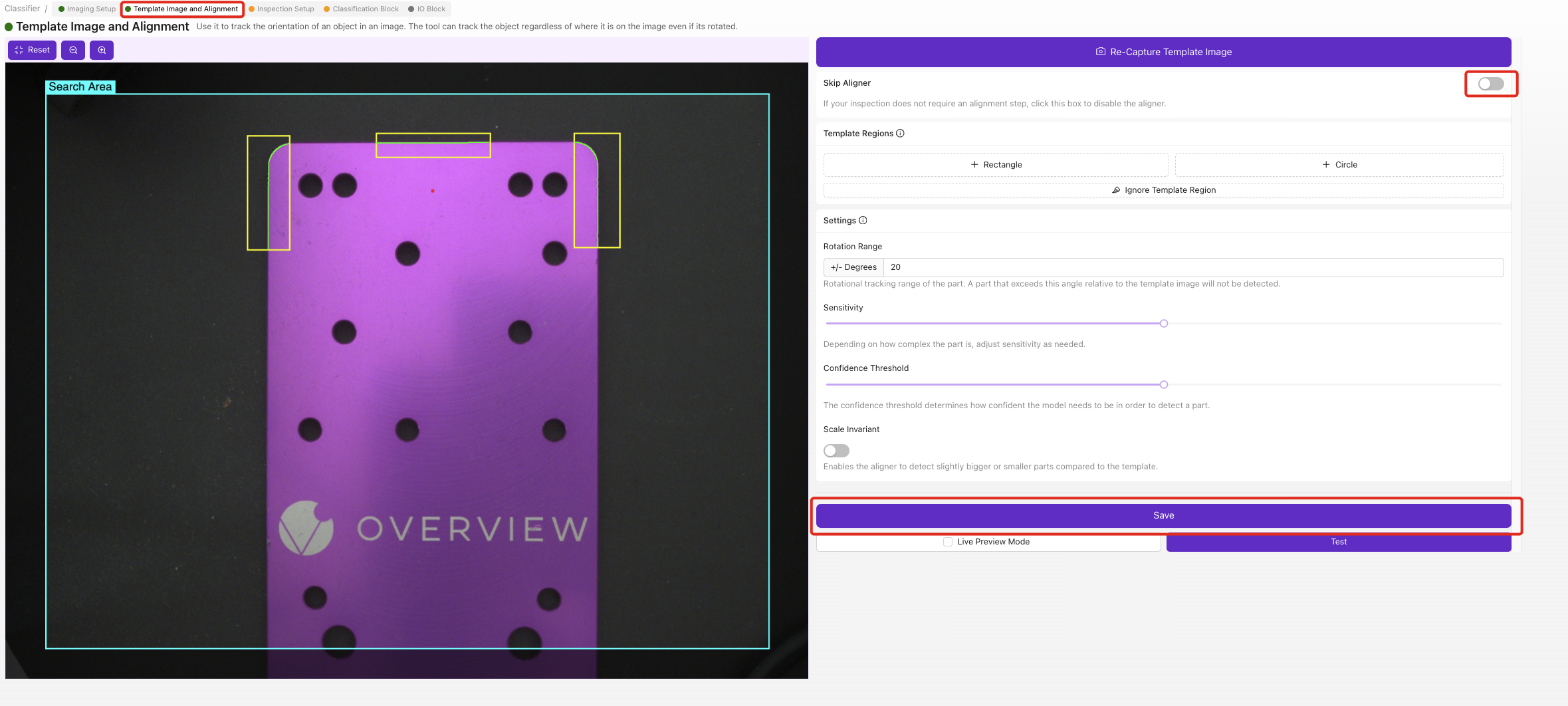
这是大多数客户感到最具挑战性的步骤,也是影响最大的步骤。对齐器是整个检测的基础。它动态地移动您的检测框,以跟踪零件在传送带上发生的位移和旋转。良好的对齐让您可以绘制更小的 ROI,这意味着更少的训练数据和更准确的 AI。对齐器 → ROI → 分类器/分割器:如果第一个环节薄弱,下游的一切都会失效。
简要说明:
- 捕获良品零件的模板图像
- 在永不改变的特征(明显的边缘、角、孔)上放置 2-3 个小型模板区域
- 在零件上将它们放置得尽可能远
- 使用 Ignore 工具清理嘈杂的边缘
- 保存,然后使用 Live Preview 测试。移动零件并验证对齐是否能跟踪它
切勿将对齐器锚定在缺陷、标签、贴纸或任何可能独立于零件移动的物体上。仅对齐到永久性、刚性的特征(机加工边缘、钻孔、PCB 轮廓)。如果您将对齐器锚定在条形码贴纸上,而有人将其贴歪,相机就会将您所有的检测框移到错误的位置。
亲自尝试: 使用下面的模拟器查看零件在传送带上发生位移时会发生什么。关闭对齐器,然后移动滑块观察检测框如何失去跟踪。
相机设置
模拟真实环境
移动生产线上的零件。
Legend
**阅读 对齐详解 以获取完整的演练。**这是本文档中最重要的页面。
第三步:感兴趣区域 (ROIs)
现在绘制 AI 实际进行检测的区域。这些就是您的感兴趣区域 (ROIs)。
关键规则:尽可能保持 ROI 小。 这是客户问题的第二大来源。阅读 为什么 ROI 大小很重要 以了解原因。
简短版本:
- 创建一个检测类型(例如 "Surface Quality"),并定义预期的类别(例如 "good"、"defective")
- 在每个需要检测的位置绘制矩形 ROI
- 让它们刚好足够包含特征,不要更大
- 用描述性的名称命名(例如 "Surface_Center")
第四步:训练您的 AI 模型
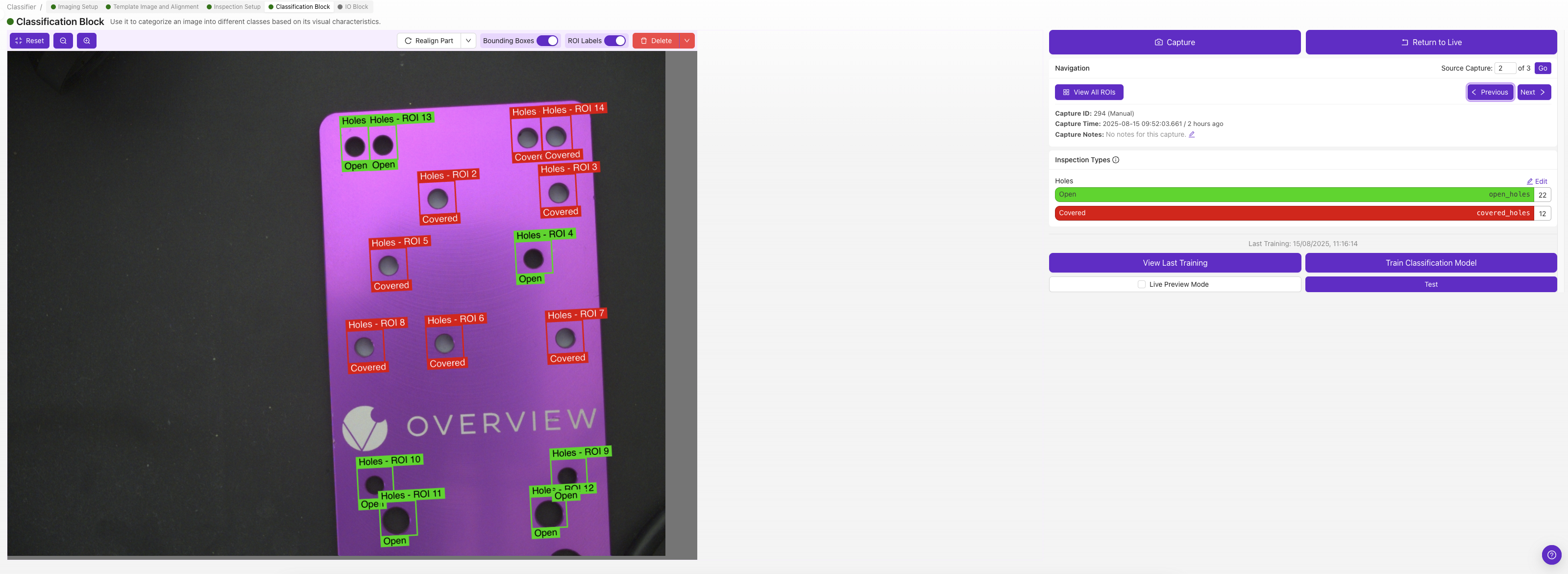
标注少量图像并训练您的第一个模型。
简短版本:
- 从每个类别 10-15 张图像开始。不要过度收集
- 训练前仔细检查每个标签(一个错误标签就可能毁掉您的模型)
- 训练(约 30 秒)以检查信号
- 使用实时预览进行测试。尝试找出问题
- 在失败的地方添加针对性数据,然后重新训练
第五步:输出规则 (IO模块)
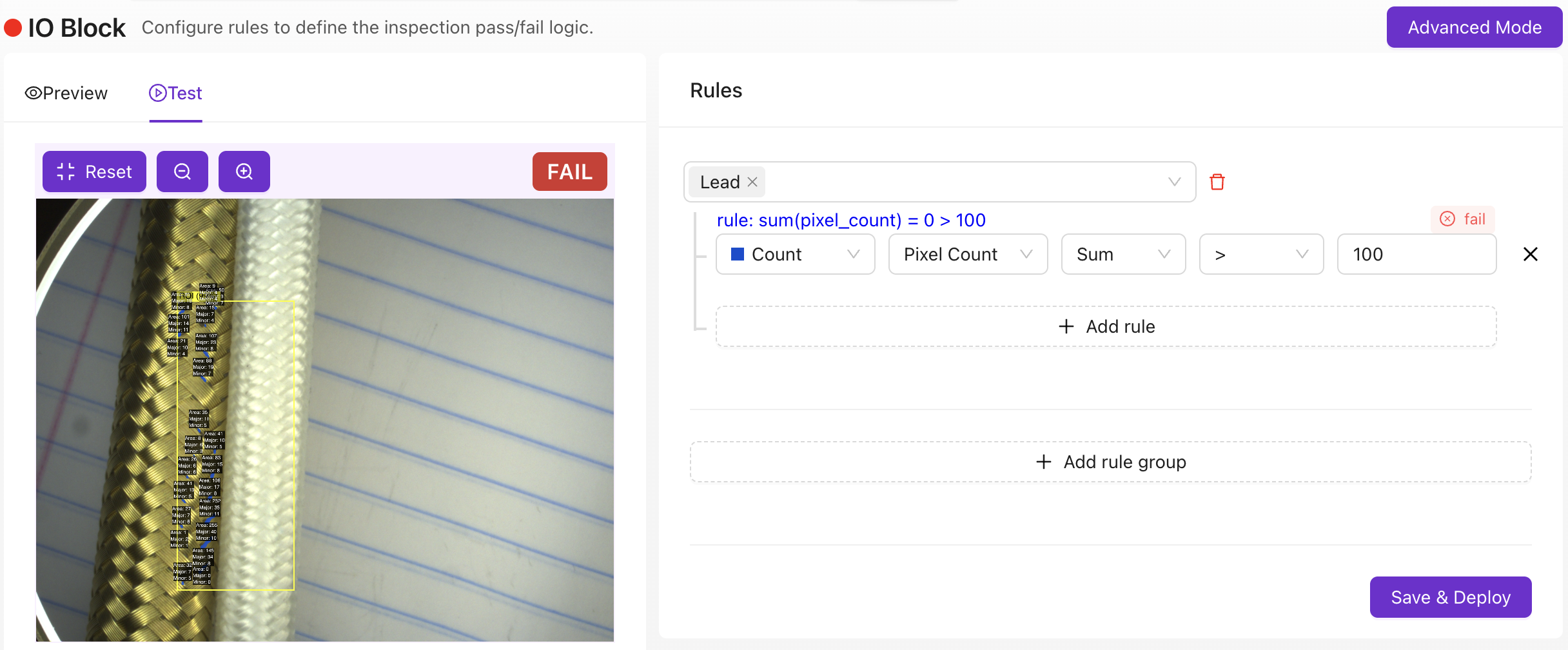
定义当 AI 做出决策时会发生什么。
基本模式: 设置通过/失败的规则。最简单的设置:所有 ROI 必须通过才算全局通过。该单一二进制结果会发送到您的 PLC、HMI 或输出。
高级模式 (Node-RED): 适用于超出简单通过/失败的任何场景:自定义仪表板、时间序列逻辑、数据路由到 MES 系统、条码扫描器集成(需要外部读取器)等。使用 tools.overview.ai 从纯英文描述生成 Node-RED 流程。
第六步:部署与验证

- 激活您的程序
- 设置触发模式(手动、硬件传感器、PLC 或间隔)
- 在系统中运行测试零件
- 验证通过/失败输出是否符合您的预期
- 检查边缘情况,即最难分类的零件
恭喜!您现在已经拥有一个运行中的 AI 检测系统。
程序检查清单
在继续之前,请确认:
- 已创建并命名新程序
- 图像设置已配置:清晰、光照良好、一致
- 对齐已设置并可靠跟踪
- 感兴趣区域 (ROIs) 已绘制:小巧、位置合适、已命名
- AI 模型已训练并通过实时预览测试
- 输出规则已配置:通过/失败符合预期
- 程序已使用正确的触发模式激活并部署