AI 驱动文档
您想了解什么?
相机通信架构
本页介绍 OV10i 的双层通信设计,以及原生工业协议如何与 Node-RED 可扩展通信能力协同工作。
通信架构概览
两层通信设计
OV10i 采用了精巧的通信架构,包含两个不同的层级:
通信层级:
- 原生工业协议 - 系统级内置通信(Profinet、Ethernet/IP)
- Node-RED 可扩展协议 - 程序专属的通信能力(MQTT、Modbus、TCP、HTTP)
通信范围与控制
系统级 vs 程序级:
- 系统级协议在所有程序中全局生效
- 程序级协议对每个具体的检查工作流程独立配置
- 配置位置决定通信范围和行为
原生工业通信
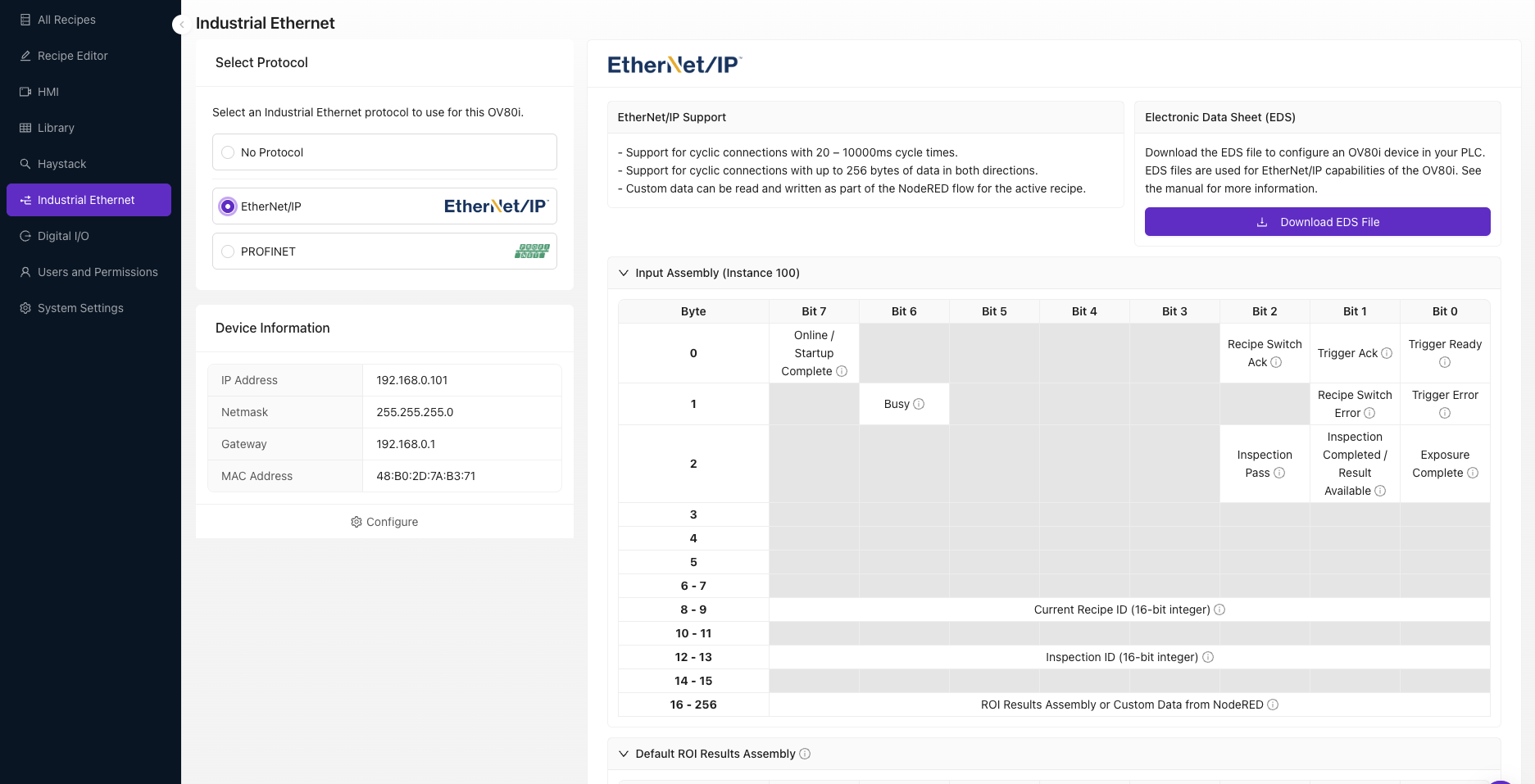
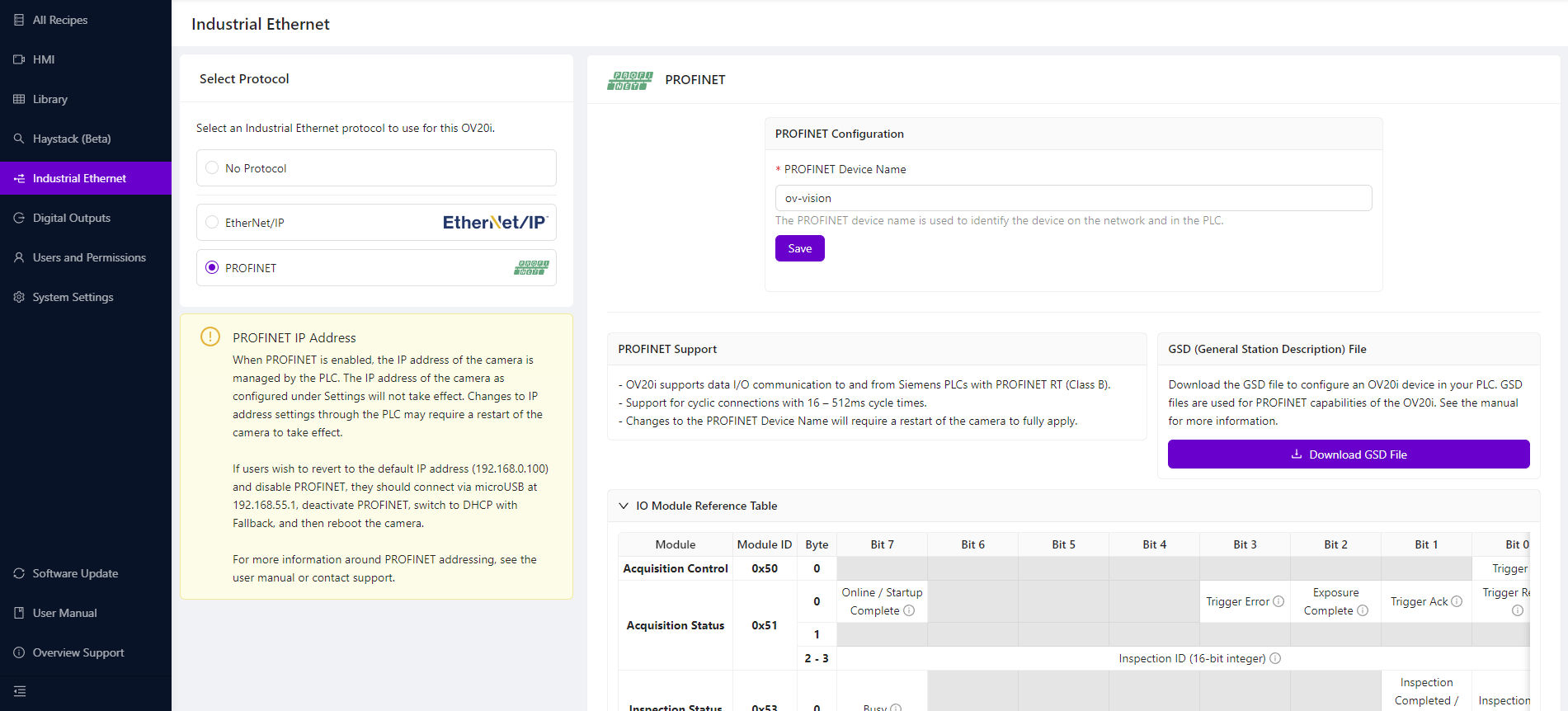
内置 PLC 协议
相机系统级配置:
- Profinet 和 Ethernet/IP - 仅在相机系统级别配置的通信协议
- 直接集成 - 无需额外编程或 Node-RED 流程
- 工业标准 - 原生支持主流自动化平台(Siemens、Allen-Bradley、Mitsubishi、Omron)
- 双向数据交换 - 触发命令、状态反馈、程序控制、检查结果
主要特性:
- 全局范围 - 配置影响所有程序
- 系统设置 - 通过相机系统配置管理,而非 Node-RED
- 即时响应 - 直接的硬件级通信
- 工业可靠性 - 专为工厂自动化环境设计
Node-RED 可扩展通信
程序级协议灵活性
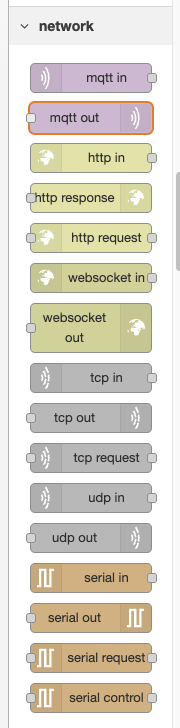
基于 Node-RED 流程的协议:
- MQTT - 通过 Node-RED 流程实现物联网消息传递和云端集成
- Modbus - 通过 Node-RED 节点进行工业设备通信
- TCP - 面向专用系统的自定义协议实现
- HTTP - 双向 Web 服务通信
程序专属特性:
- 自定义逻辑 - 每个程序定义自己的通信工作流程
- 协议选择 - 根据特定检查需求选择合适的协议
- 集成灵活性 - 连接数据库、云服务和自定义应用
- 数据处理 - 按需转换和路由检查数据
HTTP 通信的双重性
入站 HTTP(相机作为服务器):
- 开放 API 端点 - 外部系统可远程触发检查
- 程序管理 - 通过 HTTP 请求远程切换和控制程序
- 系统控制 - 外部应用可控制相机功能
- 实时访问 - 即时响应外部 HTTP 请求
出站 HTTP(相机作为客户端):
- Node-RED HTTP 节点 - 相机主动与外部 Web 服务通信
- 自定义集成 - 程序专属的 Web 服务通信
- 数据发布 - 将检查结果发送到外部系统和数据库
- 第三方集成 - 连接 MES、ERP 和云平台
通信流架构
系统级与程序级通信
相机系统通信:
- 全局配置 - Profinet/Ethernet/IP 设置适用于整个相机
- 网络基础 - IP 地址、子网配置影响所有通信
- 内置协议支持 - 工业集成无需编程
- 跨程序一致性 - 无论当前活动的程序如何,通信行为保持一致
程序专属通信:
- 独特的工作流 - Node-RED 流程对应每个特定程序
- 协议定制 - 不同程序可使用不同的通信方式
- 应用逻辑 - 通信行为根据检查需求定制
- 数据转换 - 程序专属的数据处理与路由
通信响应层级
即时响应层:
- 数字 I/O 信号 - 硬件级即时响应
- 原生 PLC 协议 - 直接的工业通信
程序响应层:
- Node-RED 流程 - 自定义逻辑与协议处理
- 数据处理 - 检查结果的转换与路由
外部集成层:
- HTTP 端点 - Web 服务集成与外部控制
- 云通信 - MQTT 和基于互联网的协议
集成模式与策略
混合通信架构
PLC + Node-RED 模式:
- 原生 PLC 用于即时触发和状态反馈
- Node-RED 流程 用于数据路由、日志记录和高级集成
- 两全其美 - 兼具工业可靠性与自定义灵活性
HTTP 双向模式:
- 入站 HTTP 用于外部系统控制和触发
- 出站 HTTP 用于数据发布和集成
- 双向集成 与基于 Web 的系统对接
多协议程序策略:
- 不同程序 使用不同的通信协议
- 应用专属 的通信方式
- 协议选择 基于集成需求
协议转换与桥接
Node-RED 作为通信桥梁:
- 协议转换 在不同工业系统之间进行
- 数据格式转换 以实现系统兼容
- 通信路由 在多个外部系统之间进行
- 集成中心 适用于复杂的多系统环境
通信架构优势
设计优势
工业可靠性:
- 原生协议 提供即时、可靠的工业通信
- 成熟标准 确保与现有自动化系统的兼容性
灵活性与可扩展性:
- Node-RED 平台 支持自定义通信解决方案
- 程序专属 通信可根据应用需求进行调整
- 面向未来 的架构支持新协议和新集成
运行效率:
- 多种通信路径 提供冗余和选择
- 实时能力 满足高速生产需求
- 自定义数据处理 针对特定应用优化信息流